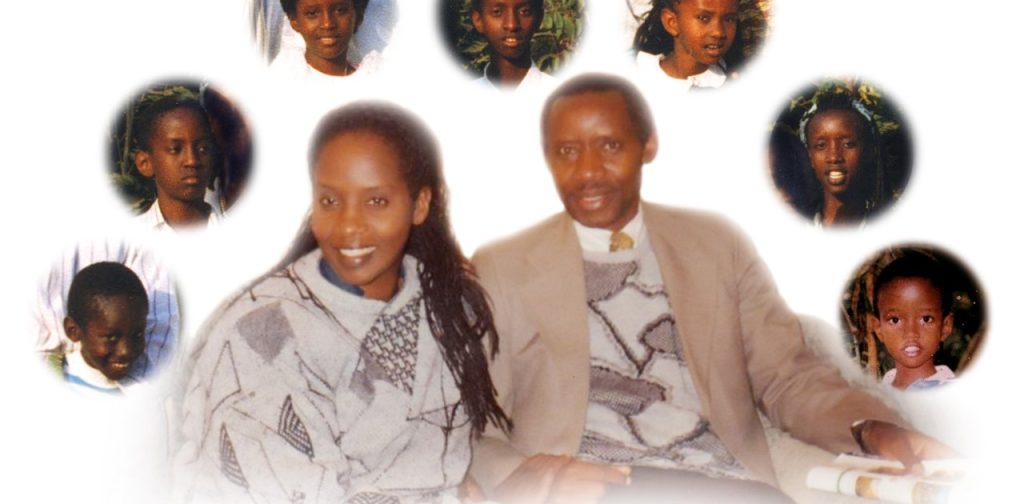
Rwanda, above the capital Kigali, April 6, 1994: President Habyarimana’s plane is shot down. The situation is serious. Cyprien and Daphrose sense that the country is about to be turned upside down. They spend the whole night in prayer in the chapel of their home before the Blessed Sacrament.
The story of Cyprien and Daphrose Rugamba is a living testimony to what love, faith, and forgiveness can accomplish when entrusted to God. Their lives remind us that Christian marriage is not only a human commitment but a path to holiness, sometimes demanding, always full of hope.
At the beginning of their union, nothing was easy. Cyprien had strayed from the faith, while Daphrose remained deeply attached to God. Their marriage was marked by wounds, misunderstandings, infidelities, and even separation. Yet Daphrose never stopped praying for her husband. She chose to remain faithful to her vocation as a wife by offering her suffering to the Lord. Through her patience, hope, and perseverance, a path of conversion opened up in Cyprien’s heart.
This testimony teaches us that prayer is an immense force. Even when all seems lost, God acts in silence. Through Daphrose’s faithful love, Cyprien rediscovered his faith. When he fell seriously ill, he was so touched by the care of his wife, whom he had so deeply humiliated, that he underwent a profound conversion: “There, her God will be my God!” And from that day on, he placed his life in the hands of Christ.
After Cyprian’s radical conversion, their marriage became a true sign of God’s love. They were inseparable, attentive to each other, united in prayer and service. Cyprian, once distant, began to serve his wife with humility.Together, they learned that true love is built on giving, forgiveness, and simplicity in everyday life.
Their faith was not limited to their home. Together with a consecrated sister, they founded the Emmanuel Community in Rwanda. As a couple, they committed themselves to peace, unity, and reconciliation in a country already in turmoil. They refused to accept the divisions between Hutus, Tutsis, and Twas. They often repeated, “You are brothers and sisters, you are part of Jesus’ party!” Daphrose also welcomed abandoned children with immense compassion, showing that conjugal love naturally extends to the weakest.
One of their friends said, “This couple was a sanctuary of God’s love!”
Because of their message of peace, Cyprien and his wife must have been high on the list of people to be eliminated. Even in the face of violence and danger, Cyprien and Daphrose remained faithful to the Gospel. The day before their death, Cyprien, during choir practice, began to dance and sing, “I will enter heaven dancing!” This prophetic gesture will remain etched in the memories of those who knew them. They revealed their total trust in God even in the face of the ultimate trial.
On April 7, 1994, the day after the presidential plane crash, a group of soldiers entered their home. The couple, along with seven of their ten children and a young cousin, were shot in the garden. Only one of the boys was slightly wounded and saved his life by pretending to be dead. This was the beginning of the terrible genocide that would claim more than 800,000 lives.
Beyond their tragic death as martyrs, the lives of Cyprian and Daphrose invite us to believe that every marriage, even a fragile one, can become a place of grace. They remind us that forgiveness heals, that prayer transforms, and that love lived with God bears fruit far beyond ourselves.
Even today, their witness continues to inspire the Church. Their canonization process, which began in 2015, reminds us that they lived their marriage as a true path to holiness.
May the example of Cyprian and Daphrose encourage us to pray together, to support each other in trials, to forgive each other without tiring, and to walk hand in hand with Christ every day. And may our homes become, in their image,
“Sanctuaries of God’s Love!”
This link allows you to watch the testimony of the Rugamba couple’s life in different languages: